
Estimated reading time: 3 minute(s)
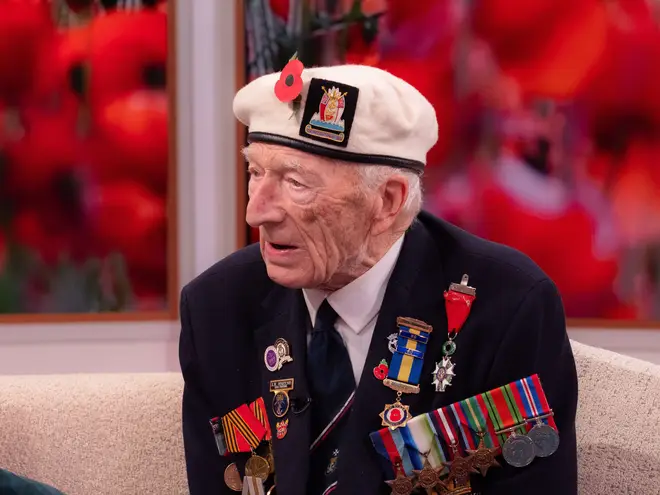
When World War II veteran Alec Penstone appeared on Good Morning Britain (YouTube), he said this:
“The sacrifice wasn’t worth the result that is now.”
Presenter Adil Ray asked the question we all wanted to know, “What do you mean by that, though?”
Alec replied:
“What we fought for was our freedom – but now it’s a darn sight worse than when I fought for it.”
And that’s where the questions ended: two stark sentences, no context, and a vacuum the internet immediately filled with its own assumptions.
The projection game
Within hours, social media had filled in the blanks.
To many, he was talking about immigration and “wokeness.”
To others, he meant the return of fascism.
The same sentence became two completely different Britains.
That’s how ambiguity works: it’s a mirror. People see what they want to see.
The end of the interview was “evidence” that Alec had been shut down before he could “say what everyone is thinking”, rather than what it actually was: keeping to the programme schedule.
And when Adil Ray had asked the obvious follow-up that any ambiguity merited, “What do you mean by that?“, he was instantly accused of “race-baiting.”
Which raises a question I’ve been thinking about since: If I’d asked that same question, out of genuine curiosity, would anyone have accused me of that? Or did Adil Ray get that reaction purely because of his own race, not what he actually said?
That’s the trap of today’s discourse. Clarification is often treated as confrontation, and curiosity is perceived as an attack.
What Alec actually meant
Days later, Penstone clarified his comments in a long Daily Mail interview.
He wasn’t raging about foreigners or “political correctness.” He was angry about corruption, greed, and selfishness:
“The country has gone to rack and ruin”
“There are too many people with their fingers in the till… too many that just want their own little corner and bugger everybody else.”
“There is no comparison whatsoever to the modern leaders. In this world today it is every man for himself. I’ve got no feelings for any of them.”
So yes, he felt the country was worse, but not for the reasons people decided he must have meant.
The outrage machine didn’t care, though. The clip and the reactions to it had already travelled further than the truth ever would.
The one comment he did say on foreigners was this:
“I’m not against foreigners coming into the country, provided they behave themselves.”
Nobody is going to argue with that, but it was not the reason Alec thinks the country has gone to rack and ruin.
When the truth still isn’t enough
Even after Alec clarified that he was talking about corruption and selfishness, not immigration or “wokeness,” you can already predict the next wave of replies:
“He’s just saying that because he’d get cancelled if he told the truth.”
Once people decide what feels true, everything else is edited to match.
That’s confirmation bias, the brain’s way of protecting the story we’ve already told ourselves. Every correction becomes “proof” that the system is hiding the real truth.
And it stops being about truth; it becomes about ownership of the story. This is why there were so many reaction videos and narratives about Adil Ray, and emotive stories about how we’d let our veterans down.
Ambiguity is silence with better PR
This is how modern politics works: you don’t need to lie; you just need to say less than you mean and let people project the rest. It’s plausible deniability wrapped in emotion.
Every side does it.
Every campaign relies on it.
And once a statement hits social media, people stop asking what was said and start fighting over what they’ve decided it means.
And often, as in this case, innocent people like Alec are dragged through the mud for their words. Pawns used by people who don’t care about the truth, only the narrative. Honestly, shame on those who weaponised a veteran this way.
What happened to listening?
Adil Ray’s question should’ve been a non-story: a journalist asking for clarity. That’s the bare minimum we should expect of journalists. But that’s not how we work anymore. We don’t wait for context; we fill the silence. We rush to explain, to judge, to be first.
It’s not even about Alec at that point. It’s about us.
We’ve forgotten how to sit in the space between “I don’t know yet” and “I’ve decided.”
Silence used to mean thought and reflection. Now it implies weakness.
I’ve seen it everywhere. I in politics, in online, even in everyday conversations.
A pause becomes a statement.
A question becomes an attack.
A headline becomes the truth because we stop reading before the nuance begins.
Actor Denzel Washington said it best: we’ve stopped caring whether something’s true, as long as we’re first to say it. Social media and unregulated commentators have taken that same problem and amplified it.
It’s the same sickness that played out in that GMB clip; the reflex to fill the gap instead of waiting for the truth to emerge.
Maybe that’s the lesson here. If we want honesty, we have to slow down long enough to hear it. Before the noise decides what was meant. Listening used to be about understanding. Now it’s become a race to react. Until we learn to pause again, we’ll keep mistaking the loudest voices for the truest ones.